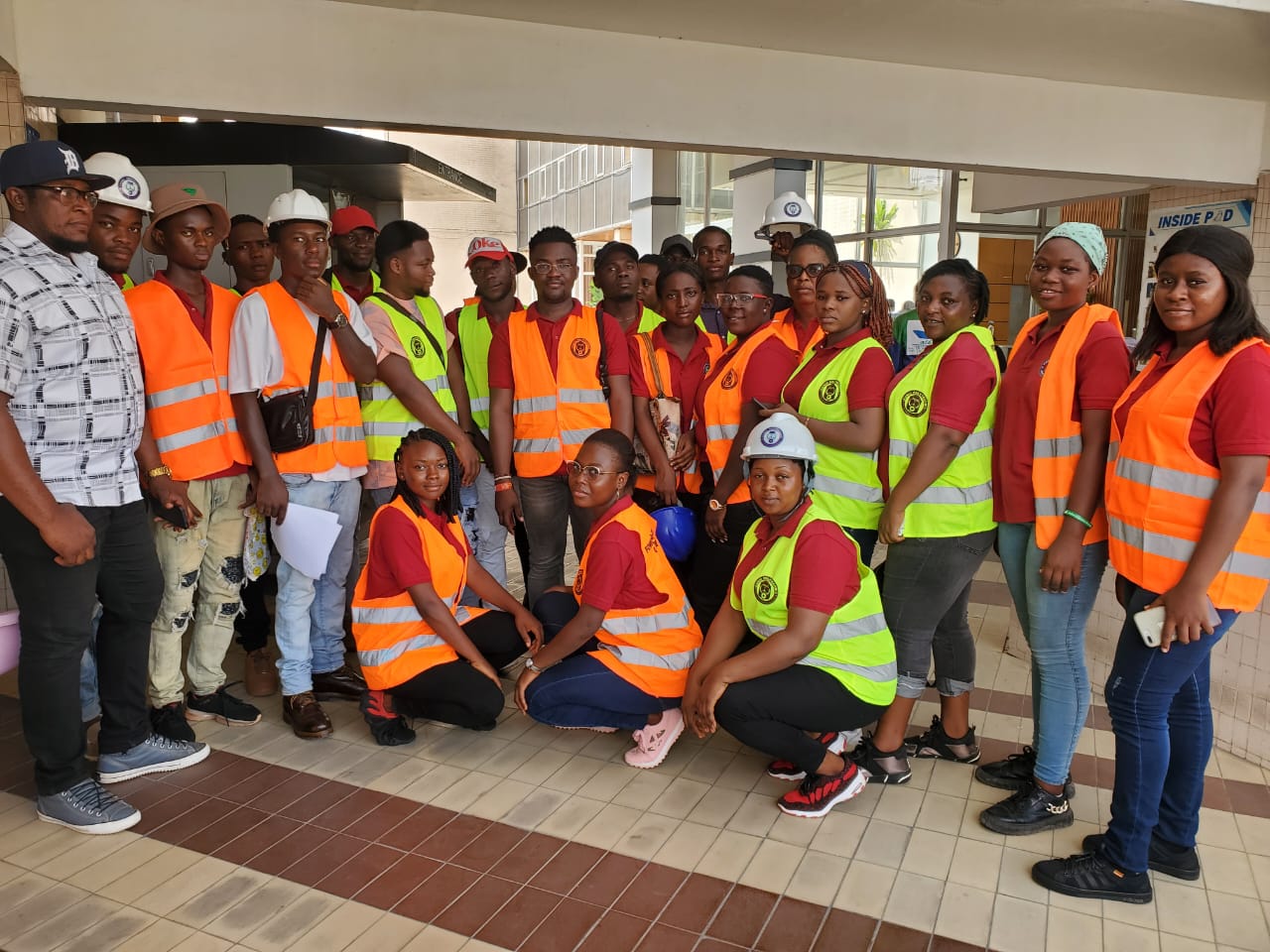
Engineering student on field work at the Douala Sea Port
Practical training remains a cornerstone of education at FOMIC Polytechnic University, where students are continuously encouraged to connect theory with real-world application. As part of this philosophy, engineering students from the School of Engineering and Technology recently embarked on a field work exercise at the Douala Sea Port, one of Central Africa’s busiest maritime gateways.
Linking Classroom Knowledge to Industrial Reality
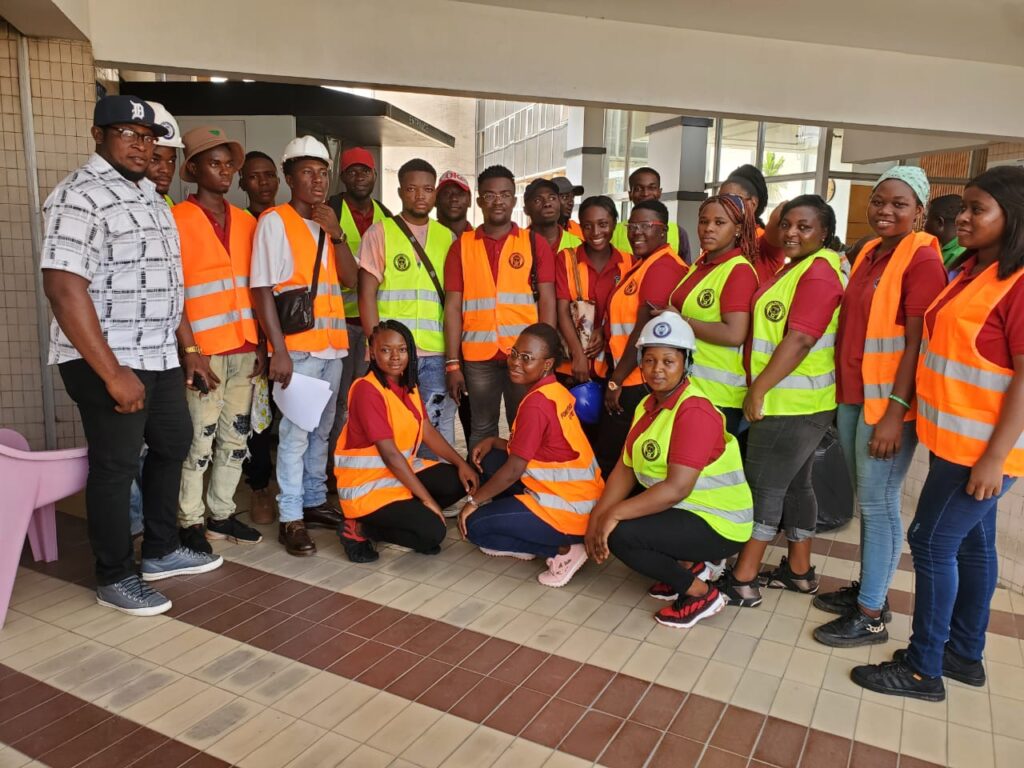
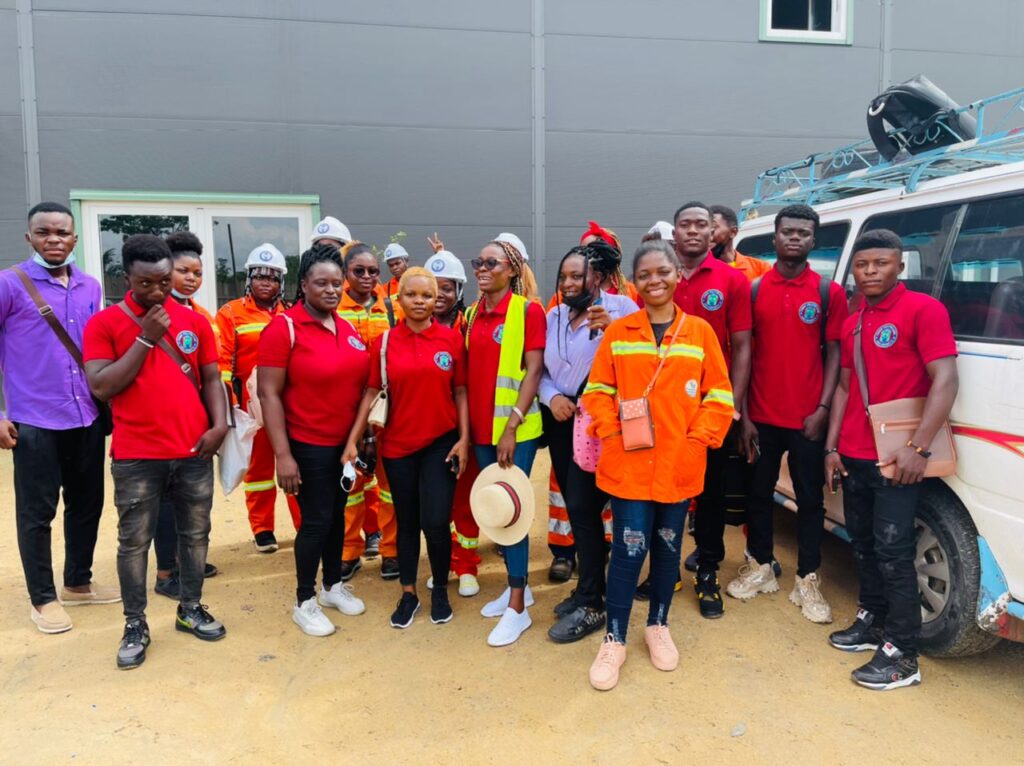
The visit was organized to help students gain firsthand exposure to modern port operations, logistics systems, and industrial processes. Led by their Head of School, Dr. Ibrahim Kofi Fuseini, the trip brought together students from several disciplines including Civil Engineering Technology, Mechanical Manufacturing Engineering, Electrical Power Systems, Petrochemical Engineering, and Port and Shipping Management.
During the fieldwork, students observed large-scale engineering systems in operation—from cargo handling machinery and hydraulic cranes to automated conveyor systems and power control units. They learned how maritime logistics integrates with mechanical, electrical, and civil engineering to ensure the smooth movement of goods through the port.
Experiential Learning in Action
At FOMIC, fieldwork is not just a requirement; it is an integral part of the engineering curriculum. By visiting the Douala Sea Port, students were able to see the concepts taught in class—such as project planning, structural design, mechanical maintenance, and industrial automation—brought to life.
Under the supervision of port engineers and FOMIC faculty members, the students participated in guided tours through operational terminals, ship-repair yards, storage depots, and power-supply units. They interacted with technical experts who explained the engineering principles behind large-scale logistics infrastructure and the challenges of maintaining efficiency in high-traffic industrial zones.
“The Douala Sea Port provides a living laboratory for our students,” said Dr. Fuseini. “It helps them understand how multidisciplinary engineering works together to sustain one of Cameroon’s most critical economic hubs.”
Enhancing Professional Readiness
The fieldwork also introduced students to the realities of safety, teamwork, and environmental responsibility in industrial settings. They were briefed on port safety protocols, emergency response systems, and environmental protection measures designed to reduce pollution and maintain sustainable operations.
Students were particularly impressed by the level of coordination required between mechanical engineers, electrical technicians, and logistics managers to ensure port efficiency. Many described the experience as a vital step toward building confidence in their professional journey.
“Being on site helped me visualize what we learn in class,” shared a Mechanical Engineering student. “It motivated me to work harder so I can contribute to industrial development in Cameroon.”
Building Future Industrial Leaders
Through fieldwork like this, FOMIC Polytechnic University continues to equip students with practical knowledge, problem-solving abilities, and an appreciation for innovation in real-world contexts. The Douala Sea Port experience reinforced the university’s mission to produce engineers who are not only technically skilled but also adaptable, safety-conscious, and globally competitive.
As the students returned to campus, their notebooks were filled with sketches, data, and insights—but more importantly, their minds were filled with inspiration. They left the port not merely as students but as emerging engineers ready to design, build, and lead the industries of tomorrow.